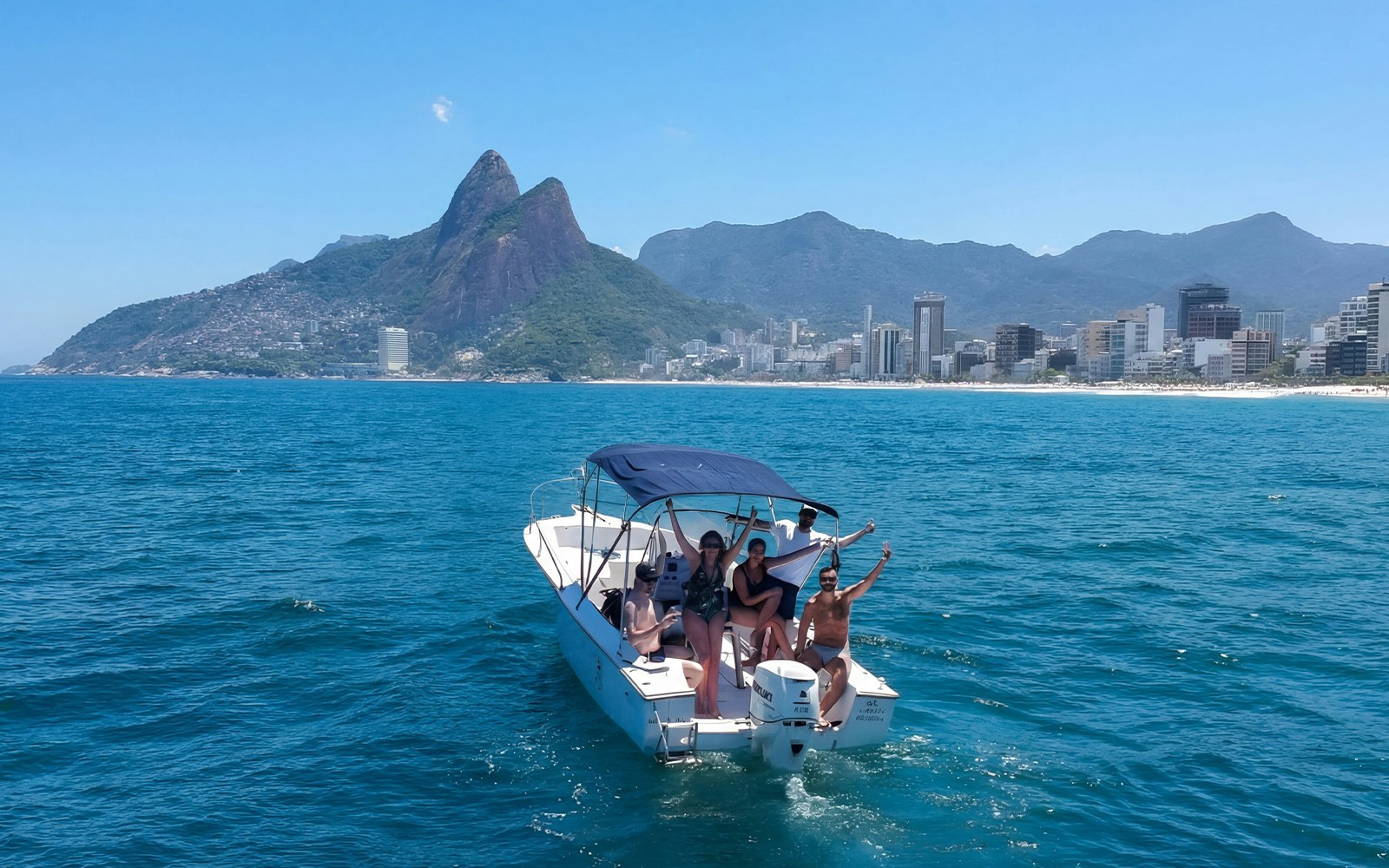
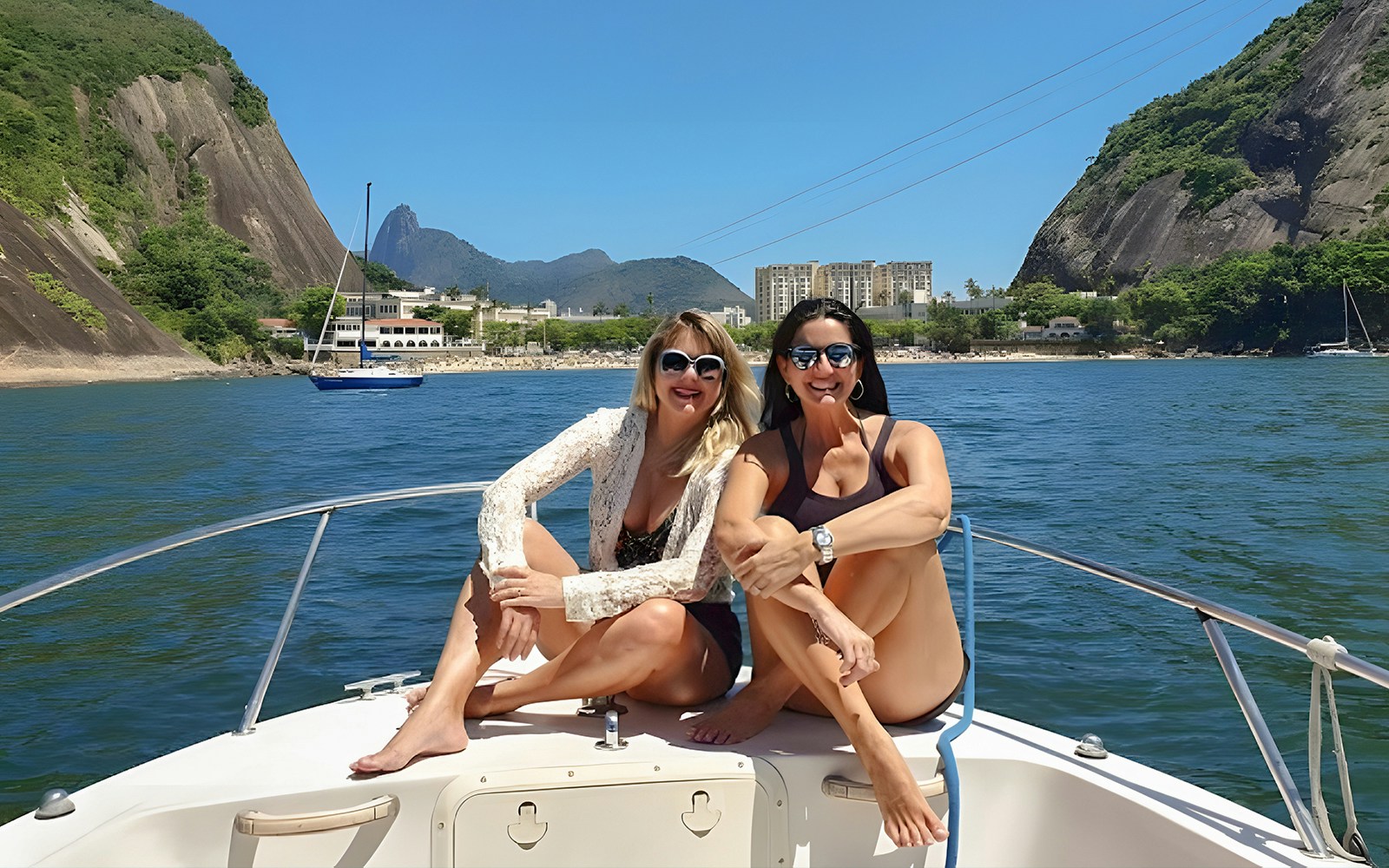
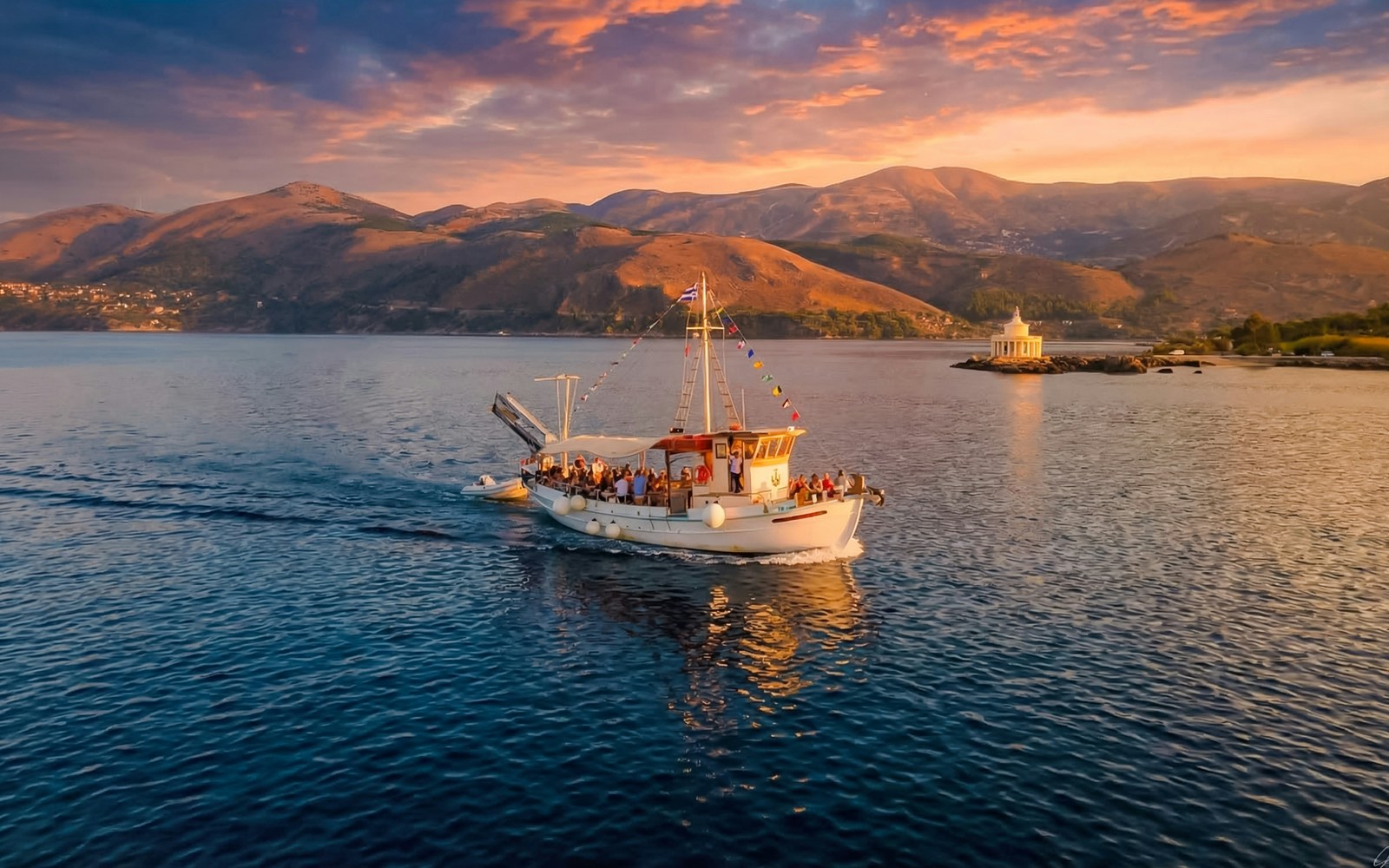
Cruise options: Sightseeing cruise, sunset cruise, sailing tour, daytime speedboat, and a sunset speedboat with drinks and a swim stop, all within Guanabara Bay, all under 3 hours. Plus full-day boat trips to Ilha Grande, Arraial do Cabo, Angra dos Reis, and Búzios for when you want a full day on the water.
Two completely different kinds of days: Bay cruises take 2–3 hours and fit around your plans in Rio. Day trips take 8–10 hours with early starts and open-sea sailing. Both depart from Rio, they just take you to very different places.
Routes and sights: City tickets loop through Guanabara Bay, past Sugarloaf, the Niterói Bridge, and the island palace of Ilha Fiscal, sights you simply can't see from land. Day trips travel Brazil's Atlantic coast to beaches that would take half a day to reach by car.
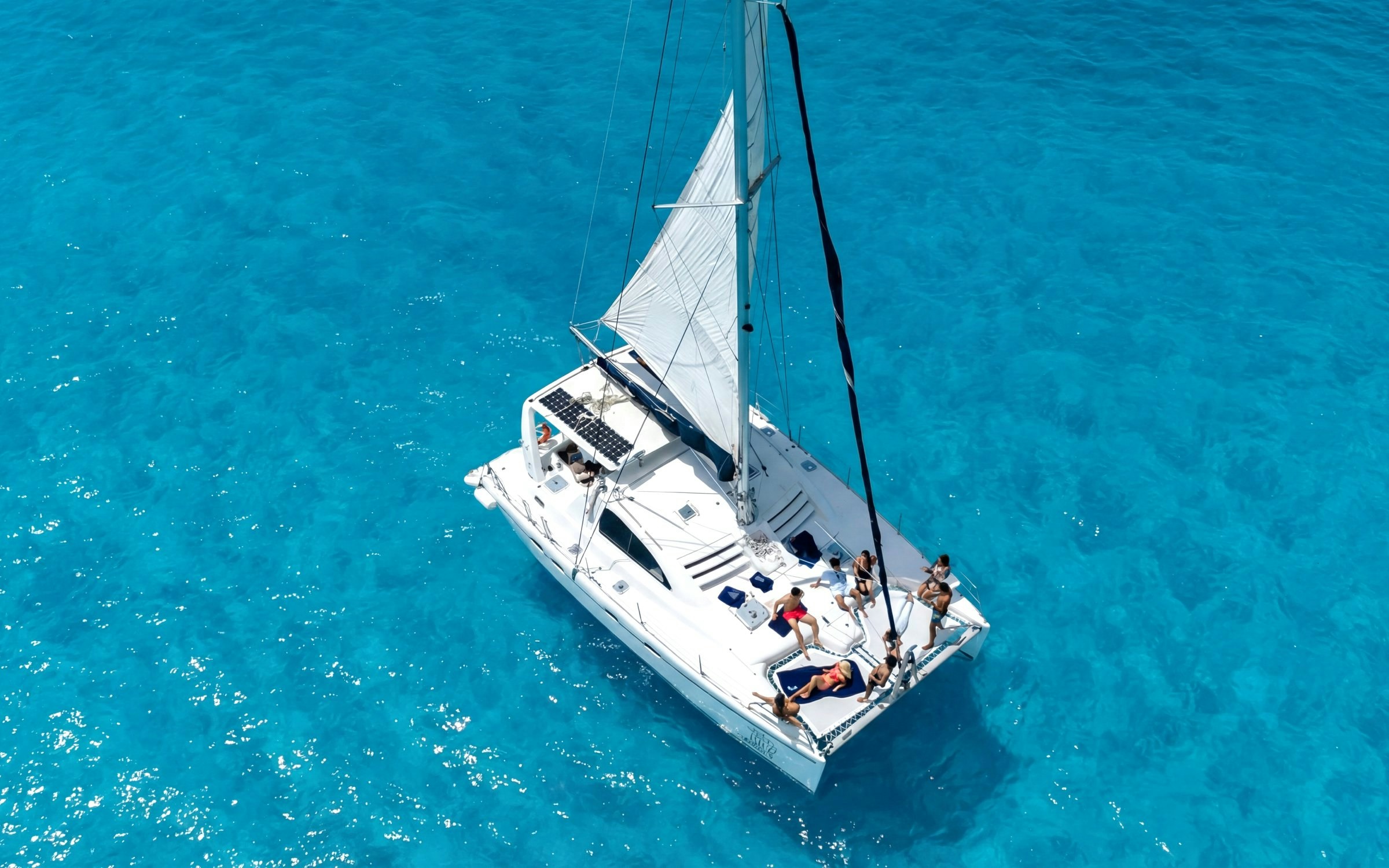
Boats and seating: Cruise boats, sailing vessels, speedboats, and a catamaran for the Búzios trip. Open seating on most city tickets, arrive early for the best spot on deck.
Boarding hub: Most tickets depart from Marina da Glória in Flamengo. Check your ticket for the confirmed pier, some day trips may use a different departure point.
When to book: Sunset tickets and weekends sell out 3–5 days ahead during April-October. Day trips, especially Arraial do Cabo and Búzios, go faster still. Book early if your dates are fixed.
Best pick: The sunset speedboat, drinks on deck, a swim stop in the bay, and Sugarloaf at golden hour. The most complete city cruise experience in a single ticket
Búzios peninsula: Ferradura Bay, 27 beaches, cobblestone Rua das Pedras
Catamaran
8–10 hrs
What to expect on your Rio de Janeiro cruise?
1/6
The view starts before you board
Marina da Glória sits directly on the bay with Sugarloaf Mountain already visible as you walk to the pier. You don't need to wait for the boat to push off — Rio announces itself the moment you arrive at the waterfront.
A palace in the middle of the bay that most visitors never see
Midway through most city cruises, you'll pass Ilha Fiscal — a neo-Gothic green palace on its own island in Guanabara Bay, built in 1889 as the imperial customs house. It hosted the last imperial ball in Brazilian history just three days before the monarchy fell. It is not visible from anywhere on the Rio shoreline and is only accessible by boat. Your cruise is the only way to see it.
Sugarloaf, the Niterói Bridge, and the skyline — together
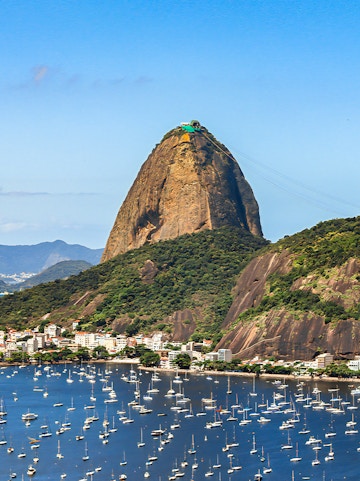
As you leave the pier, Pão de Açúcar rises 396m to your left as a single piece of granite. To the right, the Ponte Rio-Niterói sweeps 13km across the horizon. From the middle of the bay, you have both in the same frame alongside the city skyline — the only angle from which Rio looks the way it does in every photograph you've ever seen of it.
Drinks, a swim, and golden hour from the water
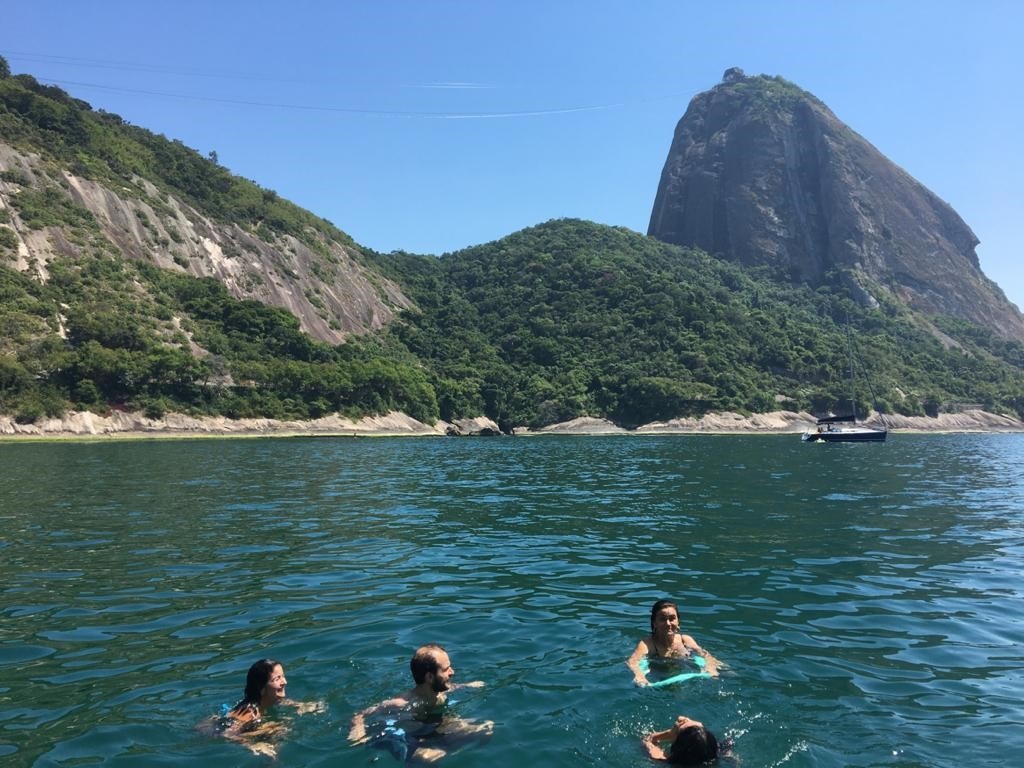
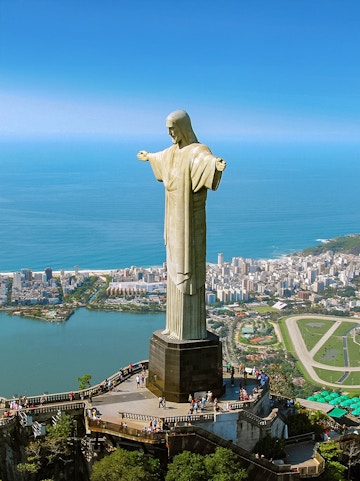
On the sunset speedboat, the boat pauses in the bay for a swim stop in calm, warm water while drinks are served on deck. The sky turns orange and pink above Sugarloaf as you dry off. Cristo Redentor silhouettes above the city. It's the kind of moment that's genuinely hard to replicate from land, and the reason this ticket sells out faster than any other.
Dolphins, seabirds, and a bay more alive than it looks from shore
Guanabara Bay has a resident population of around 30 bottlenose dolphins. They bow-ride, surface-feed, and regularly appear alongside the boat — particularly on morning departures when bay traffic is lower and the water is calmer. Frigatebirds and brown boobies dive near the wake. The 10:00am speedboat departure has the best sighting frequency of any city ticket.
Day trips: the beaches Rio keeps to itself
Full-day boat trips push past the bay into Brazil's Atlantic coastline — Ilha Grande's Lopes Mendes Beach with its car-free island and Atlantic rainforest, Arraial do Cabo's Gruta Azul with its refracted blue-light cave, Angra dos Reis' 365-island archipelago, and Búzios' 27 beaches on a peninsula Brigitte Bardot made famous in 1964. A single boat ride from Rio. A completely different Brazil.
Things to know before booking a Rio de Janeiro cruise
Because Rio was built to be seen from the water, and the bay is the only place where everything lines up at once. Sugarloaf on one side, the Niterói Bridge arching 13km across the horizon, the neo-Gothic island palace of Ilha Fiscal rising from the water in the middle of the bay, and the city's mountains-and-skyscrapers skyline framing all of it. None of that is visible from any point on the Rio shoreline. The bay view is the view.
Because Rio was built to be seen from the water, and the bay is the only place where everything lines up at once. Sugarloaf on one side, the Niterói Bridge arching 13km across the horizon, the neo-Gothic island palace of Ilha Fiscal rising from the water in the middle of the bay, and the city's mountains-and-skyscrapers skyline framing all of it. None of that is visible from any point on the Rio shoreline. The bay view is the view.
Because Rio was built to be seen from the water, and the bay is the only place where everything lines up at once. Sugarloaf on one side, the Niterói Bridge arching 13km across the horizon, the neo-Gothic island palace of Ilha Fiscal rising from the water in the middle of the bay, and the city's mountains-and-skyscrapers skyline framing all of it. None of that is visible from any point on the Rio shoreline. The bay view is the view.
Because Rio was built to be seen from the water, and the bay is the only place where everything lines up at once. Sugarloaf on one side, the Niterói Bridge arching 13km across the horizon, the neo-Gothic island palace of Ilha Fiscal rising from the water in the middle of the bay, and the city's mountains-and-skyscrapers skyline framing all of it. None of that is visible from any point on the Rio shoreline. The bay view is the view.
For photos: Avoid 12pm–2pm — overhead sun flattens Sugarloaf and bleaches the skyline. The 10:00am departure gives soft east-facing light; late afternoon from 4pm is even better.
For atmosphere: Sunset wins, full stop. The bay goes golden, the Niterói Bridge illuminates, Cristo Redentor silhouettes above the city. If you're only doing one, make it the evening sailing.
For photos: Avoid 12pm–2pm — overhead sun flattens Sugarloaf and bleaches the skyline. The 10:00am departure gives soft east-facing light; late afternoon from 4pm is even better.
For atmosphere: Sunset wins, full stop. The bay goes golden, the Niterói Bridge illuminates, Cristo Redentor silhouettes above the city. If you're only doing one, make it the evening sailing.
For photos: Avoid 12pm–2pm — overhead sun flattens Sugarloaf and bleaches the skyline. The 10:00am departure gives soft east-facing light; late afternoon from 4pm is even better.
For atmosphere: Sunset wins, full stop. The bay goes golden, the Niterói Bridge illuminates, Cristo Redentor silhouettes above the city. If you're only doing one, make it the evening sailing.
For photos: Avoid 12pm–2pm — overhead sun flattens Sugarloaf and bleaches the skyline. The 10:00am departure gives soft east-facing light; late afternoon from 4pm is even better.
For atmosphere: Sunset wins, full stop. The bay goes golden, the Niterói Bridge illuminates, Cristo Redentor silhouettes above the city. If you're only doing one, make it the evening sailing.
Plan your Cruise in Rio de Janeiro
Arrival and check-in: Arrive at least 20–30 minutes before departure at Marina da Glória (or your specified pier). Present your online ticket or booking voucher to the crew at the dock for boarding confirmation. Bring a valid photo ID — some operators require it for verification.
Security and access: Security checks are minimal on leisure cruises. Follow crew instructions at all times, remain in designated areas, and stay clear of safety equipment until directed. Life jackets are onboard and crew will brief you as standard.
Boarding process: Boarding typically begins 15–20 minutes before departure. Listen for the boarding call or follow crew guidance to the gangway. Final boarding closes approximately 5–10 minutes prior to departure. Seating on city cruises is first-come-first-served — move to the open deck quickly for the best positions.
Settling in: Once aboard, claim a spot on the open deck early — particularly the port side for the best Sugarloaf angles leaving the pier. Get your camera ready before the engine starts; Sugarloaf is already behind you as you pull away from the dock.
City sightseeing cruise: Morning to afternoon departures
Sunset cruise: Approx. 5:00pm–6:00pm (earlier in May–July when sunset is around 5:30pm)
Sailing tour: Morning to afternoon departures
Daytime speedboat tour: 10:00am departure
Sunset speedboat tour: Approx. 5:00pm–5:30pm
Day trips (Ilha Grande, Angra, Arraial, Búzios): Early departures, typically 7:00am–9:00am; return by early evening
Best time of day to cruise: Late afternoon is ideal for golden-hour light and cooler air. Morning sailings (10:00am) catch calmer bay waters, better wildlife sightings, and softer east-facing light on Sugarloaf — excellent for photography.
Best season / months: April to October (dry season) is the best time for Rio cruises — clear skies, calm seas, and manageable humidity. The shoulder months of May, June, September, and October offer the best balance of good weather and fewer crowds. November to March is Brazilian summer: warmer and livelier, but afternoon thunderstorms are frequent and can affect day trips.
Marina da Glória
Address: Marina da Glória, Parque do Flamengo, Glória, Rio de Janeiro, RJ 20021-060 | [Find on Google Maps]
By metro: Line 1 (Orange) to Glória station — 8–10 minute walk to the marina. Exit the station toward the park side, follow the waterfront path north. It's flat the whole way.
By bus: Buses along Av. Infante Dom Henrique serve the Flamengo waterfront. Tell the driver 'Marina da Glória' — it's a recognisable stop.
By Uber/taxi: Search 'Marina da Glória' — apps pin it correctly. A reliable option from Copacabana (~15 min), Ipanema (~20 min), or the Centro (~10 min), traffic dependent.
By car: Enter via Av. Infante Dom Henrique. There is paid parking inside Parque do Flamengo. On weekends and public holidays, the park fills quickly — allow extra time and consider public transport instead.
Onboard restrooms on cruise boats and catamarans (limited or no toilet facilities on speedboats — use the pier facilities before boarding)
Drinks and light snacks available on board select city cruises; full bar included on the sunset speedboat tour
Open-air deck seating and shaded indoor sections on cruise boats
Life jackets, safety equipment, and trained crew on all vessels
Marina da Glória pier: ticketing counter, waiting area, public restrooms, café nearby
Larger cruise boats typically have accessible boarding ramps and spacious deck seating suitable for wheelchairs and strollers.
Speedboats involve a step-down at boarding and have no covered area — limited space for wheelchairs or large strollers.
Catamarans (Búzios day trip) have open deck seating with some steps to the bow netting area.
Crew assist passengers with mobility needs on request — contact the operator in advance to confirm specific requirements for your ticket.
Early boarding is recommended for elderly travellers or those with limited mobility.
Tips & guidelines
Sit on the port side (left) of the boat when departing Marina da Glória — Sugarloaf Mountain is directly ahead and slightly left as you pull away from the pier. The starboard side faces the port infrastructure. This is the single most impactful seating decision on a city cruise.
The bay feels breezy even on hot Rio days, and after 5pm the temperature drops noticeably on open decks. Bring a light layer for sunset and evening sailings — first-timers almost always underestimate this, especially coming from Copacabana where the evening still feels warm on land.
Avoid the 12pm–2pm city cruise window if photography matters to you. The overhead tropical sun at that hour creates harsh shadows across Sugarloaf's granite face and bleaches the skyline. Morning (10am) and late afternoon (from 4pm) give substantially better light for the same views.
The 10:00am speedboat departure is consistently the best slot for dolphin sightings. Bay traffic is lower early in the day, and Guanabara Bay's resident bottlenose population (roughly 30 individuals) tends to surface-feed and bow-ride more actively before midday. This is not a guarantee — but the odds are meaningfully better.
For the Arraial do Cabo day trip, ask your guide or crew at boarding whether the Gruta Azul (Blue Grotto) entry is expected to be optimal that day. The blue light effect inside the grotto is created by sunlight refracting through the submerged cave entrance — it only works when water visibility and tide levels align. At low visibility, it's still a cave, but the famous blue glow is absent.
On open-sea day trips (Arraial do Cabo, Búzios, Ilha Grande, Angra), take motion sickness tablets before you board — not once you're already feeling unwell. The crossing from Rio to Arraial do Cabo in particular can have noticeable swell, especially in the November–March wet season. Tablets bought from a Brazilian farmácia are effective and cheap; you cannot get them on the boat.
Day trips are long days — 8–10 hours with an early start. Pack a dry bag (or a waterproof phone pouch at minimum), reef-safe sunscreen (several operators request this in the marine protected areas around Ilha Grande and Arraial), and a compact snack. The included lunch is typically mid-trip; the hours before and after involve time on the boat where hunger can catch you off guard.
Mobile signal is patchy between Rio and Búzios or Arraial do Cabo — download offline maps of your destination and your return route before you leave the hotel. Google Maps offline works well. Also download your boarding confirmation offline in case you lose signal at the pier.
Tipping is customary for smaller-group and sailing tours in Rio. For a day trip or private sail, R$20–50 per person is the standard range for good service. For city cruises, a small tip to the crew at the end of a smooth experience is appreciated but not expected.
The sunset speedboat sells out faster than any other city option — it's a small boat, the capacity is limited, and the combination of drinks, swim stop, and golden-hour timing makes it the highest-demand ticket in the bay. In the April–October peak season, book it at least 5 days in advance, and a week ahead if you're travelling on a weekend.
Frequently asked questions about Rio de Janeiro cruises
City cruise tickets — sightseeing, sunset, sailing, and speedboat — last approximately 2–3 hours. Full-day trips to Ilha Grande, Arraial do Cabo, Búzios, and Angra dos Reis run 8–10 hours from departure to return.
Some Rio cruise tickets have last-minute availability. Sunset tickets, weekend sailings, and popular day trips — especially the Arraial do Cabo and Búzios routes — often sell out 3–7 days ahead during April–October. Book early if your dates are fixed.
City sightseeing and sunset cruises stay within Guanabara Bay and last 2–3 hours. Day trips travel the Atlantic coast to beach destinations like Ilha Grande, Búzios, and Arraial do Cabo, lasting a full day with lunch included.
Yes — Guanabara Bay offers views of Sugarloaf Mountain, the Niterói Bridge, and Rio's layered skyline that are simply not replicable from land. Day trips reach beaches that would take half a day just to reach independently by car.
Guided commentary adds meaningful context — particularly for Fiscal Island and historical bay landmarks that have no visible signage from the water. It makes the route significantly richer, especially for first-time visitors to Rio.
Light, breathable clothing and flat-soled shoes with grip are recommended. For evening and sunset sailings, bring a light jacket — the bay is breezy after dark. On swim-stop tours, wear your swimsuit underneath and bring a compact towel.
The sunset speedboat tour in Guanabara Bay covers all the iconic landmarks, includes drinks and a swim stop, and gives you Rio's most cinematic light — making it the single most complete city cruise experience in the assortment.
Most Rio cruises welcome children. Speedboat tours may have age or weight restrictions — verify with the operator before booking. Day trips are 8–10 hours and can be tiring for very young children; factor this in when choosing.